
The Place of Islam in Indonesian Contemporary Democracy
By Pradana Boy Zulian

Pradana Boy Zulian
Associate Professor in Islamic Legal Studies
University of Muhammadiyah Malang, Indonesia
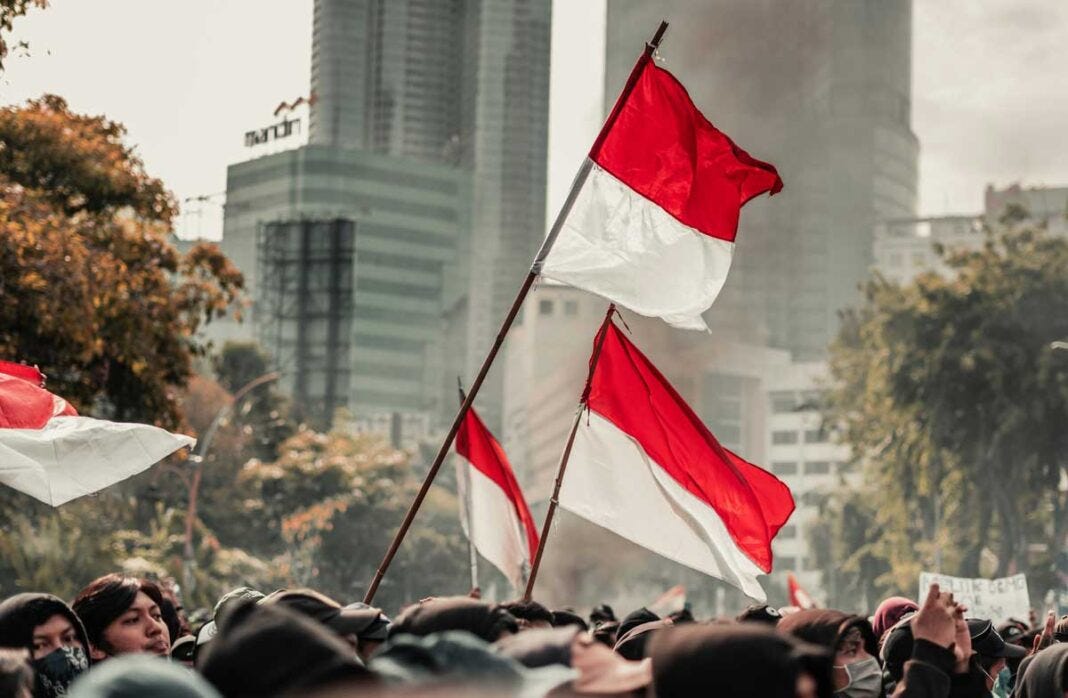
SINCE the fall of Suharto in 1998, almost three decades ago, Indonesia has turned into a democratic country. By democratic, it may refer to many dimensions. But in general, democracy in Indonesia might be understood in terms of freedom of speech, the establishment of new political institutions, and open space for expressions from diverse groups within society. In addition, the democratic nature of Indonesia in the post-Suharto era is also evident from the lifting of so many political restrictions, which have enabled suppressed public voices to emerge. Among those voices, expressions of Islam in various orientations and agendas are the most notable. The important point with this phenomenon is that the diversity of Islamic voices in Indonesia stands on different positions regarding many important issues, with democracy being one of its important ingredients. Considering this fact, it is interesting to analyse how diverse Muslim groups in Indonesia play their respective roles in the Indonesian emerging democracy and in which ways Muslim voices matter for the future of democracy in the country.
Before moving further, however, one important point must be underlined. Regarding democracy in Indonesia, there have been some remarkable questions circulated among scholars and the public. Those include: Is Indonesia a real democracy? Has Indonesia substantially adopted democracy as its political system? Or what kind of democracy is actually Indonesia practicing? In this relation, before discussing the place of Islam in Indonesian democracy, this article will initially discuss this question by laying down theoretical fundamentals on democracy. By this, measuring the Indonesian case of democracy from a theoretical point of view is important.
Is Indonesia a Democracy?
Let’s start with the nature of democracy. Fareed Zakaria (2003) argues that “democracy is a political system marked by… by free and fair elections, rule of law, separation of powers, protection of basic liberties of speech, assembly, religion, and property.” Among many other elements, Zakaria lists free and fair elections. Likewise, Samuel P Huntington identifies democracy as a system of government that is characterized by the presence of open elections. In his words, “Election, open, free, and fair, are the essence of democracy.” The primacy of election as a feature of democracy can also be justified from Larry Diamond’s (1990) view. She defines democracy as “a system of government in which the people choose their leaders in regular, free, and fair elections and enjoy basic civil and political liberties.” Election as the basic requirement for a democracy to work is also echoed by Francis Fukuyama (2014). He believes that “Modern democracy is defined by regular, competitive, multiparty elections on the basis of universal adult suffrage, conducted by secret ballot.”
However, others view democracy as not merely about elections. Amartya Sen (2005), for example, maintains that democracy is not merely a system of elections. Further, he stresses the presence of “a way of public reasoning” as a fundamental ingredient of democracy. On par with Sen’s judgement of democracy, Jürgen Habermas (1996) argues that an established democracy must take care of the deliberation of opinion and will. In his own words, democracy “rests on the institutionalization of deliberative processes of opinion- and will-formation.”
Although all those concepts might not be sufficient to measure the theoretical foundation of democracy as a whole, those views of prominent scholars in political studies can be employed to initially evaluate the nature of Indonesian democracy. Taking one or two basic elements of a democracy as analytical units, it would be sufficiently evident that Indonesia is a democracy. The system of election in Indonesia since 1998 has dramatically changed. Led by a body named Komisi Pemilihan Umum (Indonesian Commission for General Elections), Indonesia employs a direct presidential election, open-list proportional representation for legislative elections, and majoritarian regional representation. This system has made the Indonesian election system the most liberal in the world. By this parameter, it is difficult not to qualify Indonesia as a democracy.
Subsequently, the other parameter of democracy is the separation of powers. In this respect, Indonesia is indeed an excellent model for democracy. In fact, long before the fall of Suharto, the Indonesian governmental system had been characterized by the separation of powers, and it had brought the three pillars of trias politica into existence. However, in practice, it was an executive-heavy government, in which the executive dominated the governance, while legislative and judicial bodies mostly played as legitimizers of any decisions that the executive took. The situation changed in the Reform Era, where legislatives hold very strong control overthe government. In the current context, it is not an exaggeration to conclude that the separation of powers has both formally and practically functioned.
As a result, from the theoretical point of view, Indonesia is undoubtedly an emerging democracy in the world.
Indonesian Muslim Voices on Democracy
Now, let’s evaluate how the dynamics of democracy in Indonesia influence and are influenced by Muslim groups in the country. Sociologically speaking, Indonesian Islam is featured by its diverse orientations in many respects, such as in methods of text interpretation, ideological leanings, political orientations, or attitude towards modernity. In my previous study (2007), I developed a category of Indonesian Islam based on their religious orientations. They are moderate, progressive-liberal, and radical-conservative groups. The first group refers to Muslims who embrace middle positions in such elements as: the position towards religious text (the Qur’an and Sunnah), accept Indonesian state ideology, and show a proportional response towards the West and its civilization. The progressive-liberal orientation, on the other hand, apply contextual approach towards religious text, shows a very positive response to the West and its intellectual achievement. Furthermore, this group also sees the adoption of Western values and modernization as the main pathways for Muslims to cure their malaise. In contrast to the second, the radical-conservative group exhibits a textual orientation in understanding and practicing religion. Furthermore, they show disagreement with humanly-created political systems or systems of government and advocate for the adoption of Godly-directed political systems.
Although this dynamic may seem resonate with what has been taking place in many Muslim-majority polities, the Indonesian case of Muslim’s voices diversity on democracy shows its unique case.
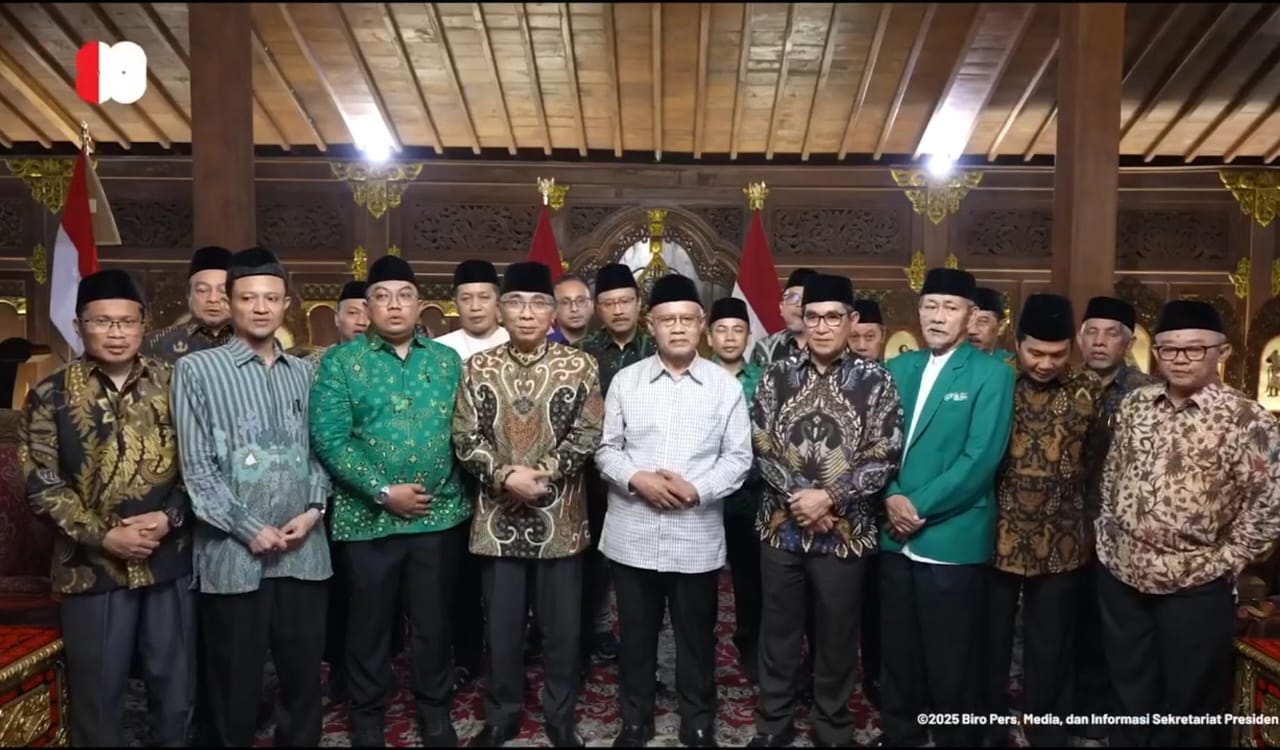
Firstly, to build further analysis based on my categories on Indonesian Muslim groups, all three groups show different attitudes towards democracy. The first group, represented bythe two largest moderate Muslim groups of Muhammadiyah and Nahdlatul Ulama’, show proportional response towards democracy. Professor Haedar Nashir, the general chairman of Muhammadiyah Central Board, advocates that Muslim Indonesia to accept democracy as a tool to develop civility among Indonesians regardless of their identities. In a similar tone, Yahya Cholil Staquf, the general chairman of Nahdlatul Ulama’, shows his support for democracy as the Indonesian system of government. He believes that democracy should be developed continuously by all parts of society. Democracy, Yahya says, cannot be built merely through formal ways, but through popular support of Indonesian society in general.
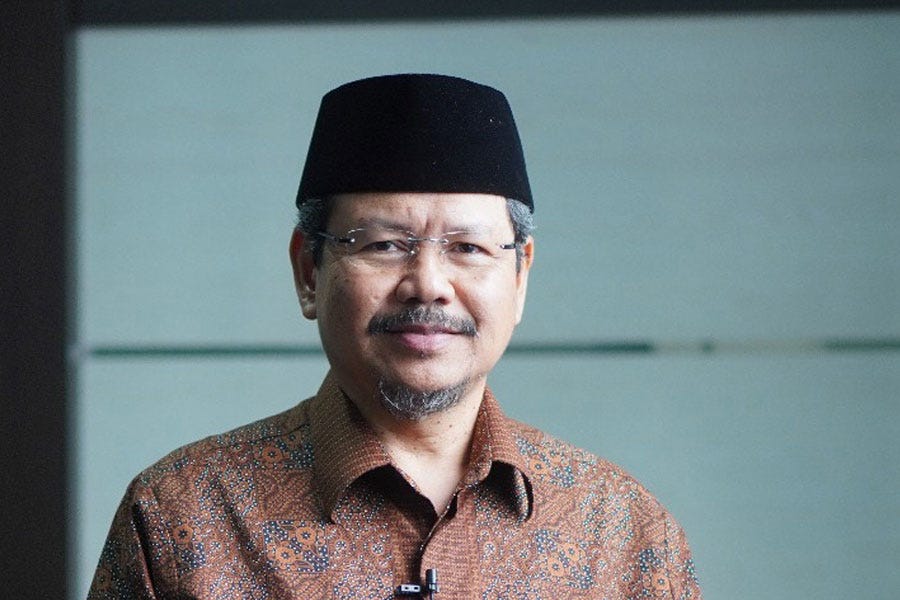
In terms of acceptance towards democracy, the progressive-liberal group’s positions resemble those of moderate groups. Luthfie Assyaukani (2011), an advocate of liberal Islam, argues that democracy is currently the most proper system of government in the world, and this is also the case with Muslim polities. In other words, Assyaukanie believes that democracy is completely compatible with Islamic values. The other progressive-liberal proponent, the late Azyumardi Azra, also shows his positive attitude towards democracy. Azra argued that Indonesian Islam has a unique historical trajectory. This uniqueness has enabled Indonesian Islam to live hand-in-hand with democratic culture more organically compared to many other Muslim-majority countries in the globe, which witnessed authoritarianism or sectarian conflicts, resulting in the absence of democratic consolidation. Furthermore, Azra’s work relates democracy to two Indonesian indigenous values, namely Islam’s pluralist traditions and historical accommodation. These two elements, along with nationalist movements has laid fertile ground for democratic development in Indonesia.
In opposition to previous groups, the radical-conservative group deserves special attention for its resistance to democracy. They believe that democracy is incompatible with Islamic teachings and values. Ismail Yusanto, the prominent leader of Hizbut Tahrir Indonesia, views democracy in a very negative tone. In his words, democracy is now seen as merely a procedure for attaining power. However, he critically noted that whether the procedure itself is followed with honesty or not, fair/authentic or not, is something that must be seen with doubt. Furthermore, Yusanto underlines the pragmatic element in democracy as a system of government. The ultimate goal of democracy is power, and only power, he says. Thus, pragmatism is on the rise. Ideology is no longer important. Consider how an Islamic party can ally itself with a secular party, which has long been known to obstruct anything Islamic. At the same time, fraud is becoming increasingly commonplace. The law is being manipulated. The law should control pragmatism. Instead, the law is being used as a tool to legitimize pragmatism.
Secondly, the other uniqueness of Indonesian democracy is that it is criticised but at the same time, the critics of democracy enjoy a democratic milieu. The case of Hizbut Tahrir Indonesia is the best example to explain this thesis. It is clear that Hizbut Tahrir strongly rejects democracy for several reasons. However, it is because of democracy that diverse Muslim groups include those Islamist, enjoy existence in Indonesia. As has been indicated earlier, democracy in Indonesia has enabled many orientations of Islam to exist, develop, and live in Indonesia. In other words, without democracy, Islamist groups will never gain the existence in the post-Suharto Indonesia. Here lies the paradox: democracy is criticised, but democracy is also enjoyed.
This paradox is that Australian-based Indonesian scholar Nadirsyah Hosen even further calls Hizbut Tahrir the smuggler of democracy. According to Hosen, Hizbut Tahrir has shown an ambiguous attitude toward democracy. They criticised and rejected democracy. But, when they were dissolved by the Indonesian government due to their advocacy of the caliphate system, which was in opposition to Indonesian state ideology, they exploited the democratic system. They argued that in a democratic system, all orientations should gain their right to live, and therefore, the dissolution of Hizbut Tahrir Indonesia violates democratic values.
Thirdly, as democracy in Indonesia is developing and Muslim groups show different attitudes towards democracy, the support of Indonesian Muslim groups is determinant for the future of democracy in the country. As the largest religious group, Muslim support or rejection will be an important consideration for Indonesian political leaders to take or not to take certain decisions. It is true that Indonesian Muslims voices towards democracy are diverse; however, the majority of Muslims in Indonesia are moderate. If by moderate is acceptance towards the Indonesian state ideology of Pancasila, the majority of Indonesian Muslims are moderate. According to Lembaga Survei Indonesia, a political survey think-tank, 86,5 percent of Indonesian Muslims accept the Indonesian state ideology.
Conclusion
In the post-Suharto era, Indonesia has been adopting democracy as its political system or system of government. Although doubt circulated among scholars and the public about whether Indonesia is factually applying democracy, theoretical and practical initial assessments show the compatibility of Indonesian democracy with the nature and basic elements of democracy.
As a newly introduced system of government, democracy has been responded diversly by Indonesian Muslim groups. Using a broad category of moderate, progressive-liberal, and Islamist-conservative groups, it is revealed that two former groups show a positive attitude and support towards democracy, on the basis that democracy is not in opposition with both Indonesian and Islamic values. However, Islamist group as exemplified by Hizbut Tahrir Indonesia rejects democracy and see its incompatibility with Islamic values.
However, there is an important fact. Although Islamist groups reject democracy, basically their existence in Indonesia is a small part of benefit from democracy. In other words, the Islamist groups criticise democracy, but at the same time, they enjoy democracy without their awareness.
Lastly, as the majority religious group in Indonesia, the future of democracy in the country is strongly dependent on Muslims’ attitude towards democracy. Although Muslims groups’ attitude towards democracy is diverse, the majority of Muslims in Indonesia are moderate, which bring assumption that their acceptance of democracy is inevitable.