
Past, Present and Future: Legacies, Rivalries, and the Unknown
Edraak Weekly

This week’s newsletter covers developments from 24 December 2025 to 8 January 2026, focusing on the uncertainties in Yemen and Lebanon, a possible civil war in Syria, a tribute to Bangladesh’s first female prime minister, and the escalation of protests in Iran.
Edraak is our newsletter that honours the Muslim world’s diversity, reflected in the multitude of its socio-economic conditions and political institutions spanning across the continents. Traced back to its Arabic origins, إدراك encompasses timely and thorough insights into the developments of the Muslim-majority nations.
For the purposes of this report, we’ve organised the Muslim-majority nations into four zones as per their current conditions of conflict, transition, stability, and development.
Zone I: Experiencing War, Conflict, Oppression, Genocide
This zone includes countries where violence, civil war, and mass atrocity crimes dominate daily life.
A Rivalry that Decides Yemen’s Future
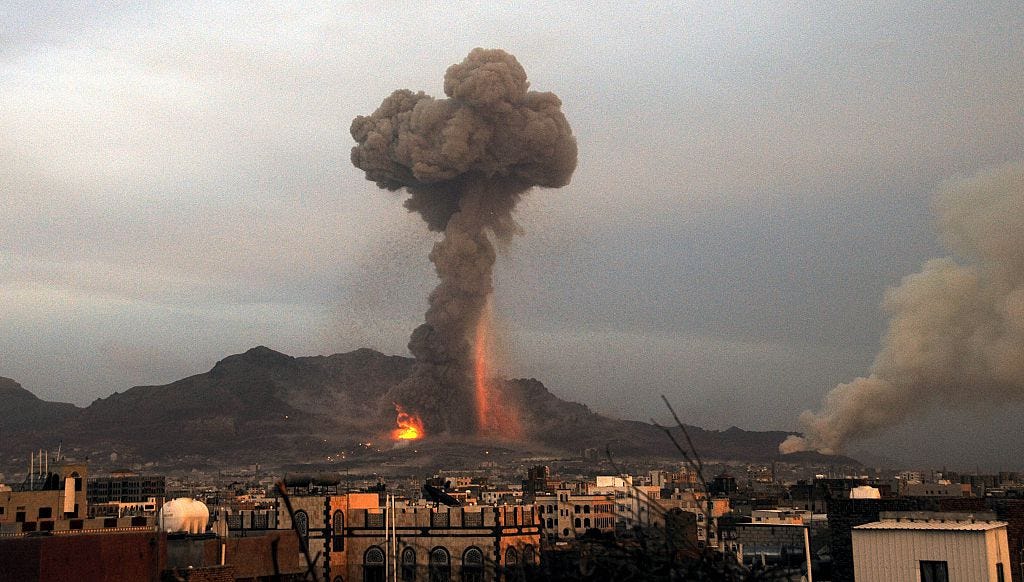
There is no doubt that the offensives involving the Yemeni government-allied forces and the Southern Transition Council are but a proxy war between Saudi Arabia and the United Arab Emirates (UAE).
On 30 December, Saudi Arabia bombed Mukalla, a Yemeni port city, after a weapons shipment from the UAE had arrived for the separatist forces, the Southern Transitional Council, which seeks an independent state in the south. The Kingdom even went as far as to warn the UAE of its “extremely dangerous” actions and to withdraw from Yemen in 24 hours’ time. The UAE later agreed to withdraw its remaining troops from Yemen.
However, over this last weekend, the Saudi-backed Yemeni government forces reclaimed the cities of Aden and al-Mukalla that had long been under the control of the separatist group.
Between the Devil and the Deep Blue Sea
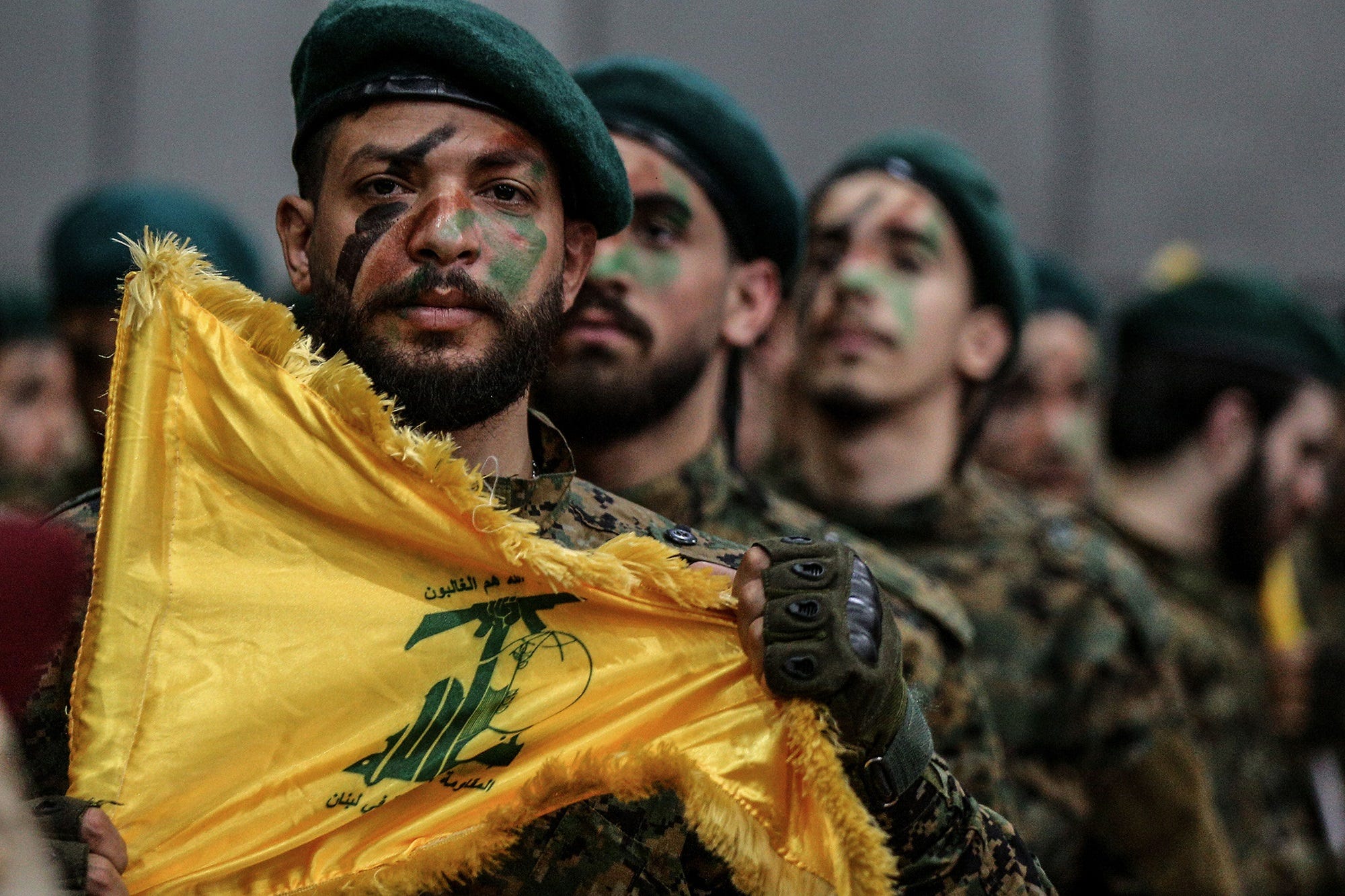
On 8 January, the Lebanese army announced that it had completed the first phase of its plan to disarm the Iran-backed Lebanese Shi’ite Muslim group, Hezbollah, which is bringing all non-state weaponry in the south between the Israeli border and the Litani River under state control.
The US-brokered ceasefire between Hezbollah and Israel in November 2024 dictated Israel withdraw from Lebanese territory, but Israel continues to occupy five strategic points near the border, conducting multiple raids within Lebanon under the pretence of bridling any resurgence of Hezbollah.
Under the same agreement, Hezbollah was to withdraw its forces north of the Litani River and have its military infrastructure dismantled in the evacuated areas, which Hezbollah had agreed to, but refused to surrender its weapons in the rest of Lebanon, as it understood its complete disarmament not to be part of the truce. Israel, on the other hand, is far from satisfied with the progress and maintains Hezbollah’s full disarmament is part of the deal and one that is “imperative for Israel’s security and Lebanon’s future.”
Israel has intensified its strikes on southern and eastern Lebanon this week, specifically Marwahin, Kfar Hatta, and Annan in the south and the villages of Hammara and Ain el-Tineh in eastern Lebanon’s Bekaa Valley, claiming to target the military infrastructure of Hezbollah and Hamas
Zone II: Transition toward Peace and Stability
Countries in this zone are emerging from conflict or undergoing volatile transitions. They are in the process of political reconstruction and institution-building.
Syria’s Fleeting Peace
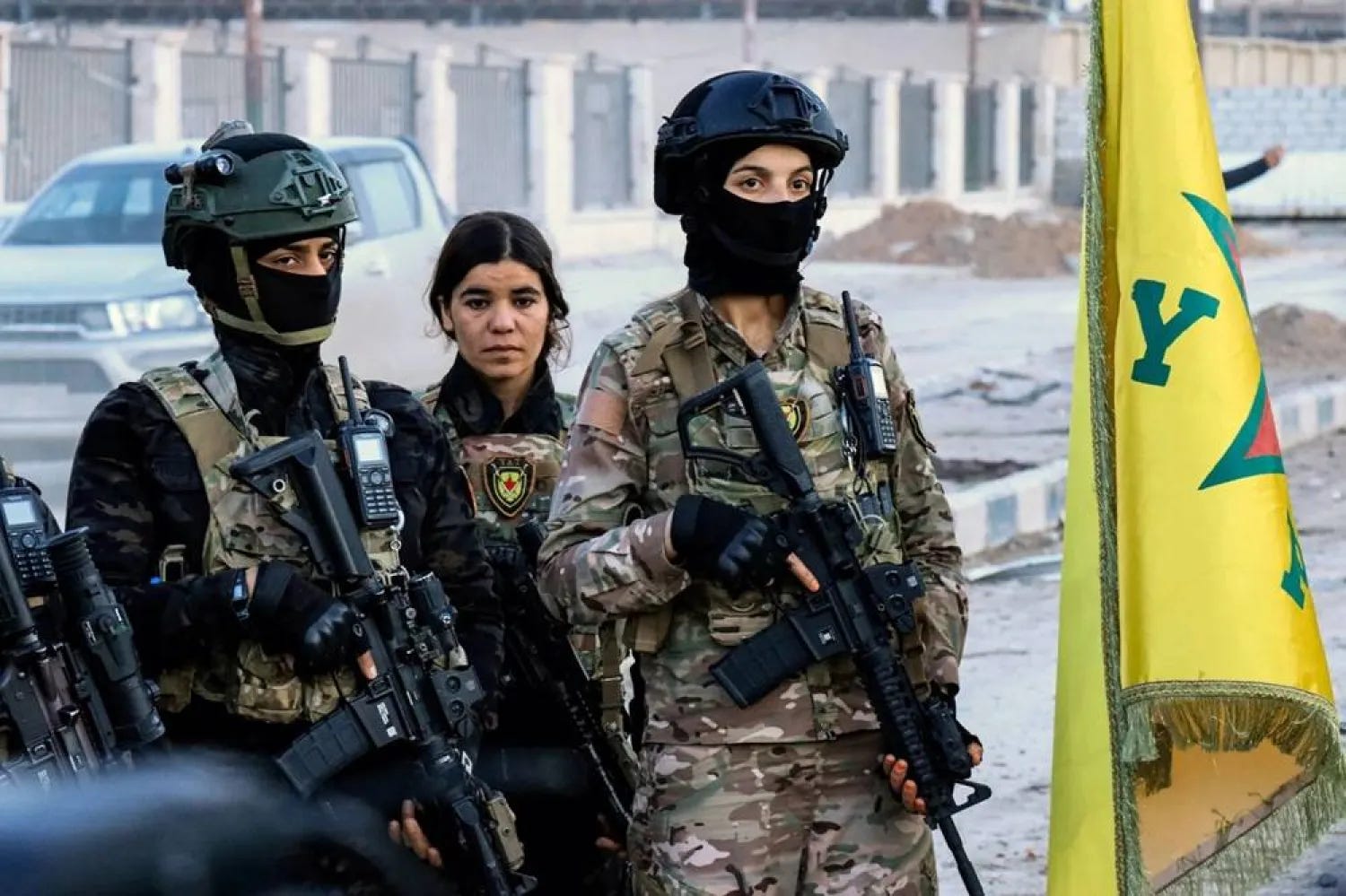
On 3 January, British and French war planes bombed a site located in Palmyra thought to be used by IS militants, a follow-up to the US’s military strike last month, which came after an ambush had killed two American personnel. Tensions have also escalated with SDF as an agreement signed by President Ahmed al-Sharaa back in March last year, which planned to integrate all civil and military institutions of the Kurdish-led and US-backed Syrian Democratic Forces (SDF) into the Syrian state by the end of 2025, continues to be pushed back. This integration would also lead the Syrian government to control the north and northeastern part of Syria held by SDF, such as border crossings with Iraq and Turkiye, as well as airports and oil fields.
Fighting between the two first erupted on 22 December last month in Aleppo during a visit by Turkish Foreign Minister Hakan Fidan, but had quickly ended after both sides had agreed to halt firing. It should be noted that Turkiye considers the SDF a terrorist organisation because the latter largely consists of members of the Kurdistan Workers’ Party (PKK).
On 4 January, following official talks between the Syrian government and the SDF, the state media reported that there were no “tangible results”. Clashes soon broke out the next day and, now entering its fourth day, have shaken Aleppo and its residents, displacing thousands. On 7 January, the Syrian Army Operations Command had ordered residents of Sheikh Maqsoud and Ashrafieh neighbourhoods to evacuate after having declared the SDF “military sites” in the areas as “legitimate military targets”.
Zone III: Stable but Economically Struggling
These countries enjoy relative peace and order, yet face fundamental economic, governance or social challenges.
The Haunted Past
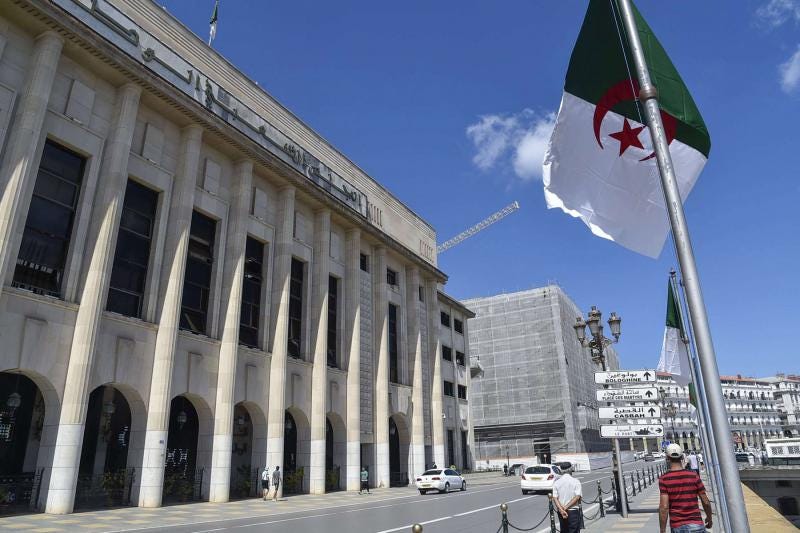
On 24 December, Algeria’s parliament unanimously approved passage of the bill that criminalised France’s colonisation of the country from 1830 to 1962, a crime and declared that Algeria was entitled to a formal apology and reparations for all the material and moral damages. The legislation has virtually brought a point of no return for Algeria and France. Immediately after its approval, the French foreign ministry termed the move “manifestly hostile, both to the desire to resume Franco-Algerian dialogue and to calm, constructive work on issues of historical memory.”
Bangladesh’s Mother of Democracy Lives On
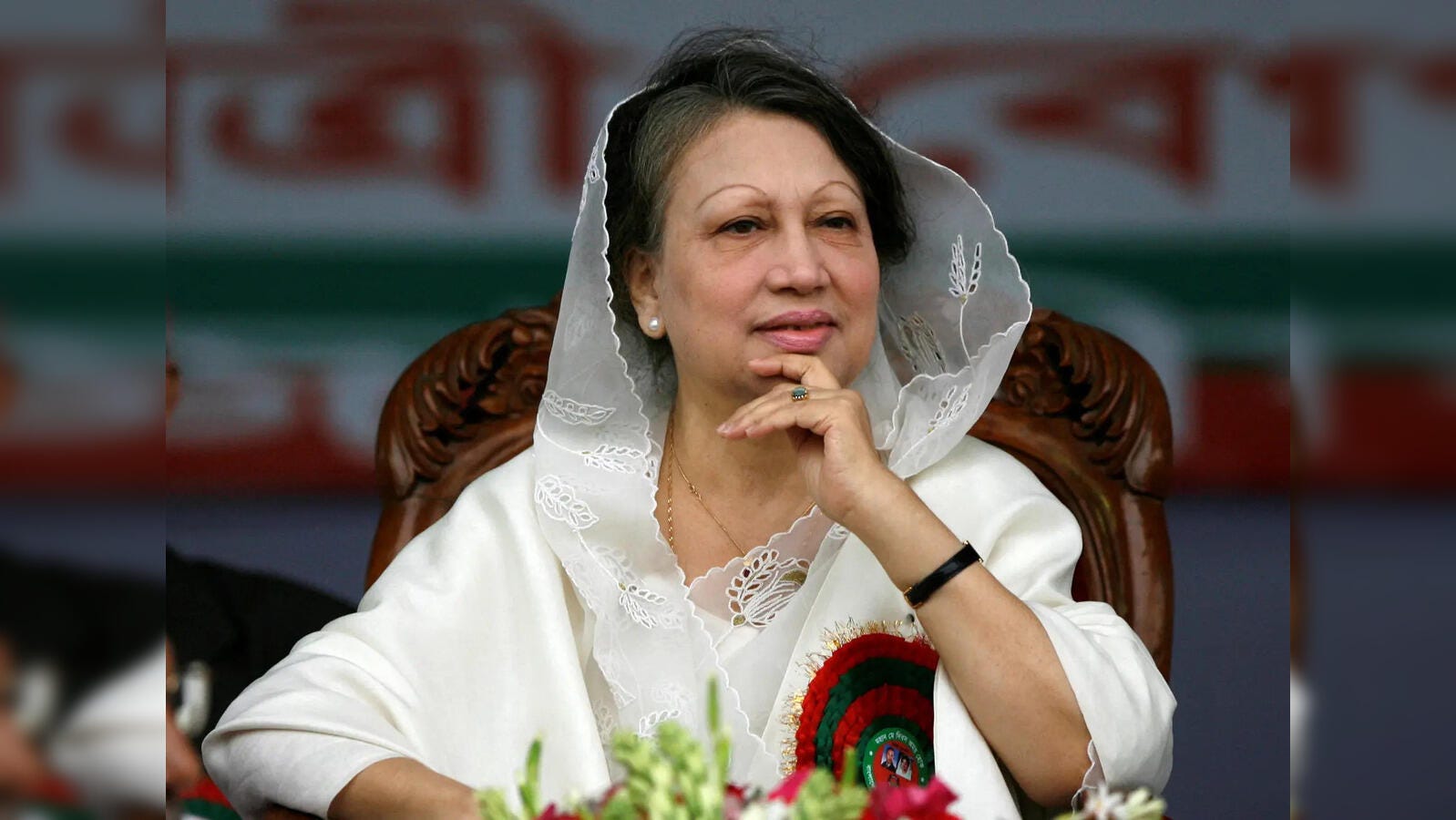
Khaleda Zia, Bangladesh’s first female Prime Minister representing the Bangladesh Nationalist Party (BNP), intended to run for general elections in February 2026 but passed away after a long period of illness on 30 December 2025. Khaleda Zia’s entry into politics began after her husband, former President Ziaur Rahman, was killed in a military coup in 1981.
Bangladesh declared three days of mourning after the death of Khaleda Zia to honour the legacy of a leader who fought back against the military dictatorship, propelled economic reforms that moved the country towards the free market, and resisted the fascist rule of her rival, former Prime Minister Sheikh Hasina.
Protests in the Spotlight
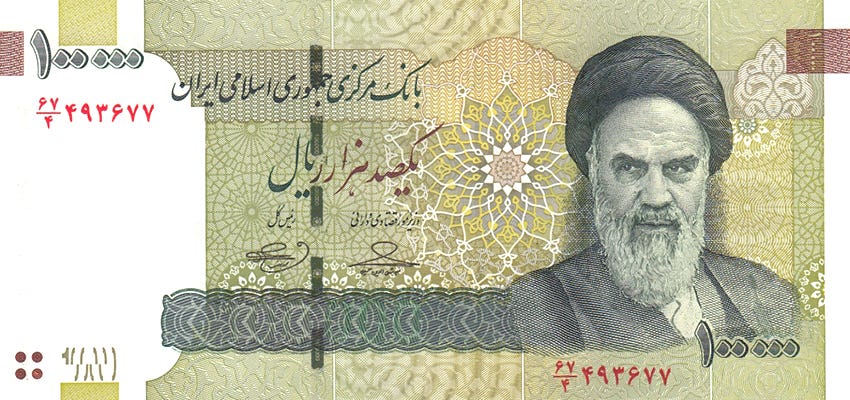
Since 28th December, protests have erupted at the Grand Bazaar due to inflation and further devaluation of the Iranian Rial against the dollar and other major foreign currencies. Iran’s Central Bank significantly reduced the subsidised exchange rates for dollars it offers to importers and producers, prompting merchants to pass price hikes directly to consumers who still grapple with the effects of sanctions. In the eleven days since, protests have spread to 111 cities and towns across all 31 provinces, sparking violent clashes between demonstrators and the security forces.
Zone IV: Developed or Emerging Economies with Peace and Stability
Zone IV encompasses those countries that have achieved a baseline of political or security stability, and which are now focused on economic growth, globalisation and strategic alignment.
Turkiye’s Fight Against Terrorism
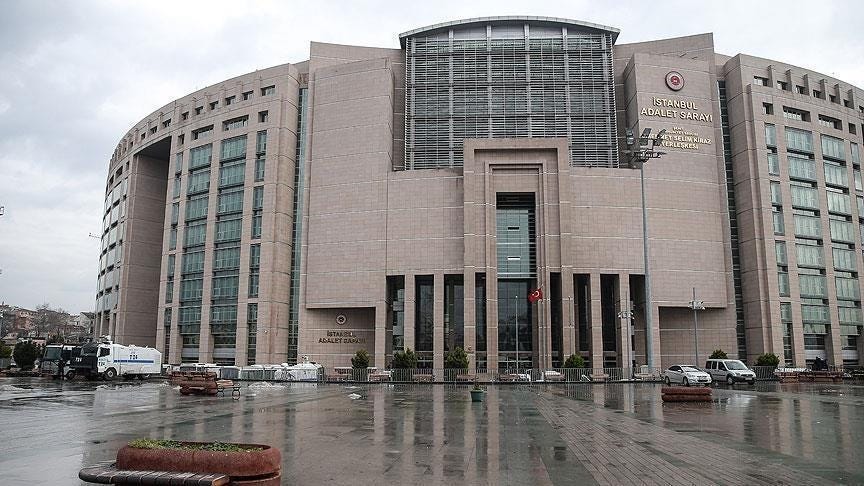
On 25 December, Istanbul’s chief prosecutor’s office had announced the capture of 115 suspected Islamic State members who were believed to be planning to carry out attacks on Christmas and New Year celebrations.
What’s in a Name?
In the first week of January, Saudi Arabia published a new naming regulation in the official Umm Al-Qura Gazette relating to the names of public facilities across the Kingdom. It mandates that any name for a mosque, school, hospital, or government building must comply fully with Islamic law and teachings.
Some of the interesting key provisions of this regulation include the use of only seven of Allah’s names: Al-Salam (The Source of Peace), Al-Adl (The Just), Al-Awwal (The First), Al-Nur (The Light), Al-Haqq (The Truth), Al-Shahid (The Witness), and Al-Malik (The Sovereign). Moreover, if a building is to be named after individuals, relevant authorities would need to verify the honoree’s Islamic conduct and moral standing.
Revamping the Penal Code
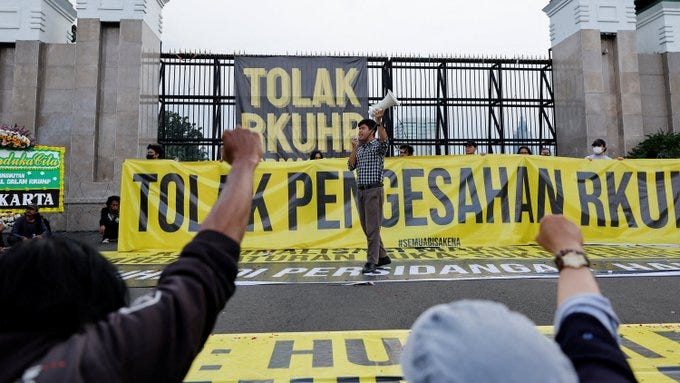
On 2 January, Indonesia replaced its Dutch-era criminal law that had governed the country for more than 80 years with its newly ratified penal code. Unanimously approved in December 2022, the 345-page new Indonesian Penal Code has now officially come into force.
Under the amended code, there are several morality-based provisions, such as the criminalisation of sexual relations outside marriage. Insulting a sitting president or vice-president, state institutions, and the national ideology are also punishable offenses. There are harsh penalties for individuals associating with Marxist-Leninist organizations and for those who spread communist ideology.
Article Pick
Read Legal Implications of Interfaith Marriage on Inheritance Rights and Child Status in the Perspective of Islamic Law and Civil Law by Shalihah, Nadia Rif’atul Karima, M. Fahmi Al Amruzi, which demonstrates the legal implications generated as a result of interfaith marriages in Indonesia, where civil law and religious law continue to face inconsistencies, particularly regarding the status of children and inheritance rights.
The Compilation of Islamic Law (Kompilasi Hukum Islam, KHI), which serves as a legal reference in religious courts in Indonesia, explicitly prohibits marriage between a Muslim and a non-Muslim, a view based on fiqh law holding that such a marriage disrupts household harmony and the faith of descendants. Therefore, under Islamic law, interfaith marriage is void by law, and hence, children cannot claim inheritance. However, the civil law recognises the right of inheritance of children born of interfaith marriages, so long as the marriage is registered.
The inconsistency in these legal frameworks affects the legal rights of interfaith couples and their offspring. The authors propose an inclusive and contextual legal approach to address the needs of Indonesia’s plural society without compromising on religious principles.